A year ago, most practice managers I spoke with were curious about AI phone tools. Now many of them are being pitched one every week.
The adoption numbers back that up. In MGMA's September 2025 poll, 68% of medical groups said they added or expanded AI tools that year. After clinical documentation, the most common use was scheduling and patient communication: reminders, phone trees, message routing, chatbots and virtual receptionists. The practices that held off gave practical reasons: cost, unclear productivity gains, trouble fitting the tools into their EHR, and not knowing where to start.
A disclosure before I go further: Medera provides people, not software. I'll try to be fair anyway, because the honest answer for most practices isn't one or the other.
What patients say
A September 2026 survey of more than 2,000 US adults, run by an answering service company, found that 75% of Americans find health-related calls stressful. Among people who had reached an AI system on a health call, about one in four said they hung up without getting help, and about one in six said they felt worse afterward. Since an answering service has its own interest in the result, read the exact numbers with some caution. The direction matches what front-desk staff see every day: when a call is stressful or complicated, patients want a person.
That doesn't mean AI has no place at the front desk. It means it belongs on the calls patients don't mind automating.
Where AI tools do well
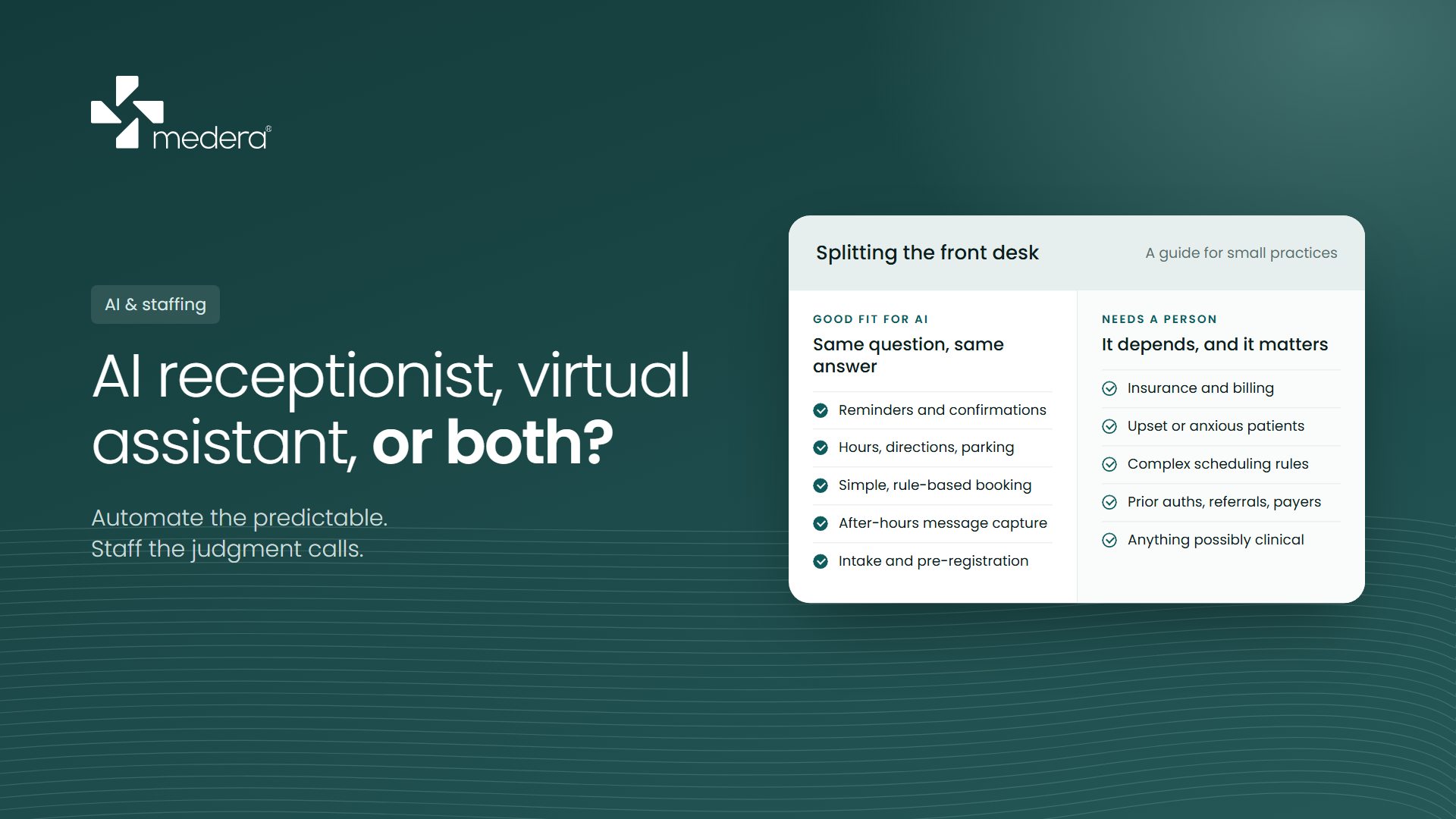
AI works best where the question and the answer are both predictable:
- Appointment reminders and confirmations
- Office hours, directions, parking, and what to bring
- Simple booking, when the scheduling rules are clear
- Capturing and routing messages after hours
- Collecting intake information before a visit
These are real hours of work, and taking them off the front desk helps.
Where a person still matters
The front desk is full of calls that start simple and turn complicated. "I need to reschedule" becomes "and my insurance changed." "Is my referral done?" becomes a call to the payer. A patient asking about a bill is often really asking whether they can afford their next visit.
- Insurance and billing questions, where the answer depends on the patient's plan, history, and situation
- Upset, anxious, or confused patients, who need to be heard, not routed
- Complex scheduling, such as provider preferences, visit types, and double-booking rules that live in your team's heads
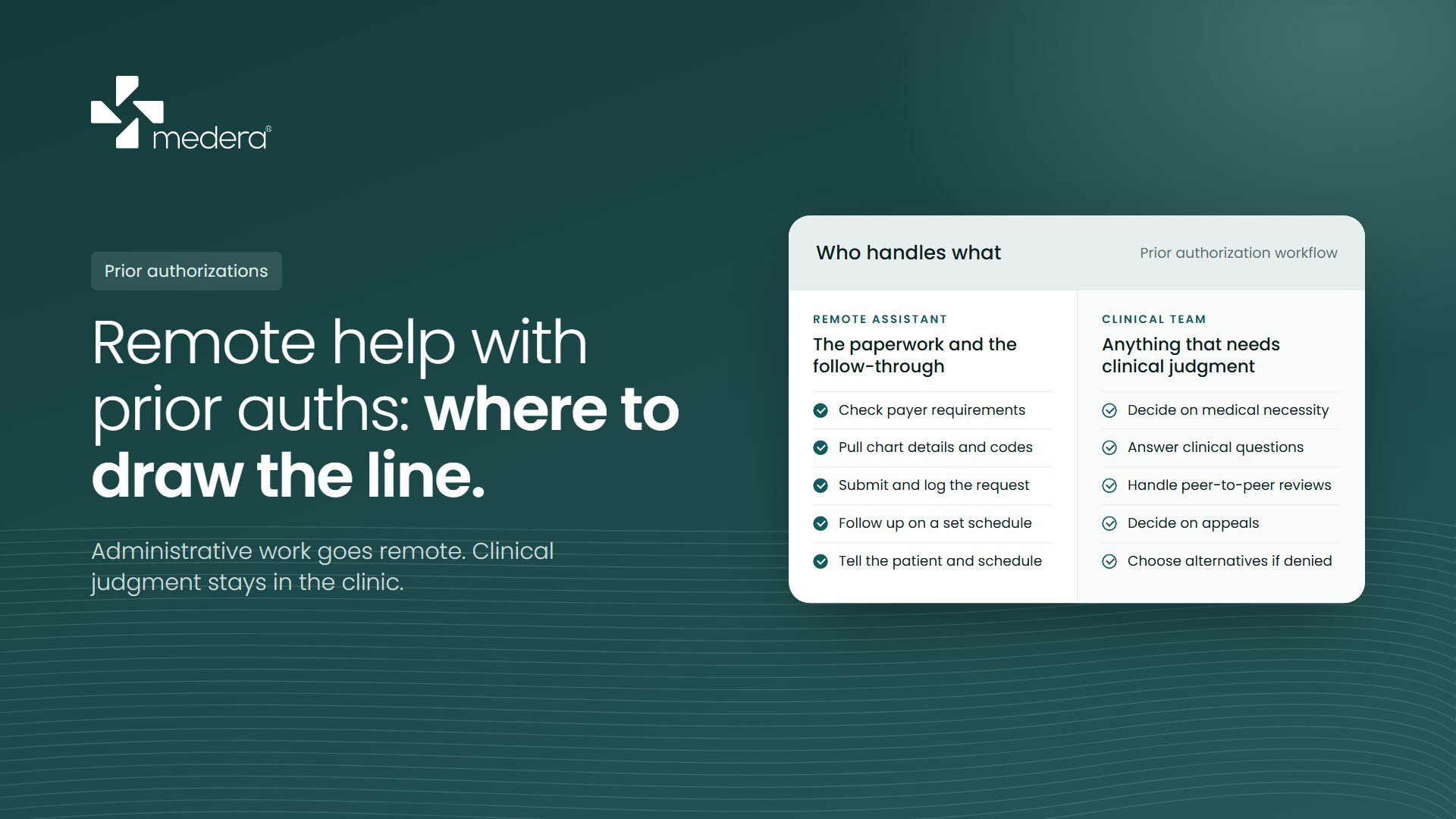
- Prior authorizations, referrals, and payer calls, which involve another organization's phone tree, not just yours
- Anything that might be clinical, which needs to reach the right licensed person, fast
How to decide for your practice
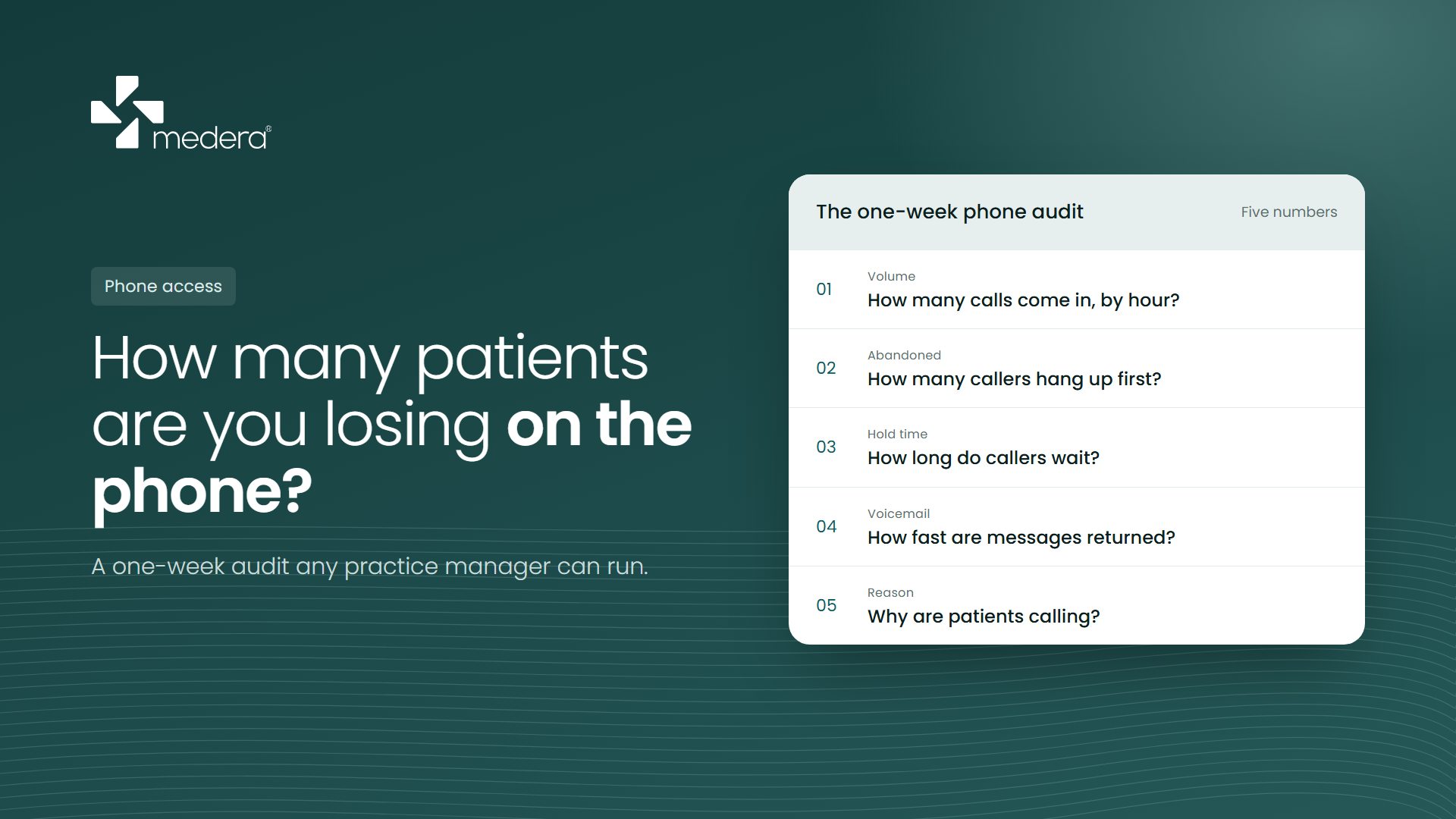
Start with your call reasons. Track why patients call for one week: scheduling, refills, billing, results, referrals, and so on. If a big share are simple reminders and FAQs, an AI tool can take real volume off the desk. If most are insurance questions and rescheduling with complications, automation will mostly add a step before the patient reaches a person.
Automate the predictable, staff the rest. For most small practices the right setup is both: AI handles the routine front end, and a person handles everything that needs judgment, including whatever the AI can't resolve.
Make the handoff the priority. The worst patient experience is an AI that can't help and can't pass the call along. Whatever you choose, test this: when the tool doesn't know the answer, how fast does the patient reach a person, and does that person already know what the call is about?
Questions to ask any AI phone vendor
- Does it write directly into our EHR and scheduling system, or does someone re-enter everything?
- How does it hand a call to a person, and how quickly?
- Will you sign a Business Associate Agreement?
- How are mistakes caught? Who reviews what it booked or told patients?
- Can we see transcripts or recordings of real calls from a practice like ours?
Good answers are specific, just like with a staffing provider. If a vendor can't show you how the handoff works, that's the answer.
The bottom line
AI is getting genuinely useful for the predictable parts of the front desk, and it will keep improving. But medical practices run on exceptions, and the exceptions are where patients form their opinion of you. Use automation where it fits, and make sure a trained person is always one step behind it.