Every practice manager knows the feeling of a front desk that can't keep up. Two people are checking patients in, the phone is ringing, a patient at the window has an insurance question, and the line rings out again. Nobody at the desk did anything wrong. There just weren't enough hands at that moment.
The problem is that a missed call is invisible. It doesn't appear on the schedule, the billing report, or the end-of-day summary. A patient who couldn't get through simply never becomes a patient, and the practice never finds out.
Why this is getting harder, not easier
Phone access is now a top concern for practice leaders. When MGMA asked medical groups what their top patient access focus would be for 2026, 22% named phone access, close behind no-shows and online scheduling.
Staffing is a big part of why. In MGMA's May 2026 poll on turnover, practice leaders said front-desk and patient access roles are where churn happens most. Where turnover rose, they linked it directly to slower check-in and checkout, scheduling errors, weaker referral handoffs, and rising call abandonment. When an experienced person leaves, the phones are usually the first thing to suffer, because a new hire is still learning the scheduling rules while the calls keep coming.
What a missed call actually costs
Industry estimates put the average dropped-call rate for medical practices at around 6.5%, and suggest that more than half of those callers were trying to book an appointment. Those figures come from vendors who sell phone solutions, so treat them as a rough guide rather than a benchmark. Your own numbers are the ones that matter.
Here's a simple way to estimate it. Take your average inbound calls per day, multiply by your abandonment rate, and assume roughly half of those callers wanted an appointment. A practice taking 120 calls a day with a 6.5% abandonment rate loses about 8 calls a day, or around 4 appointment requests. Over a month of clinic days, that's roughly 80 appointments that never made it onto the schedule. Multiply by your average visit value and the cost becomes very real.
Calls per day × abandonment rate × ½ = appointment requests lost per day.
And that's only the calls that rang out. It doesn't count the voicemails returned the next afternoon, after the patient had already found another office.
Run a one-week phone audit
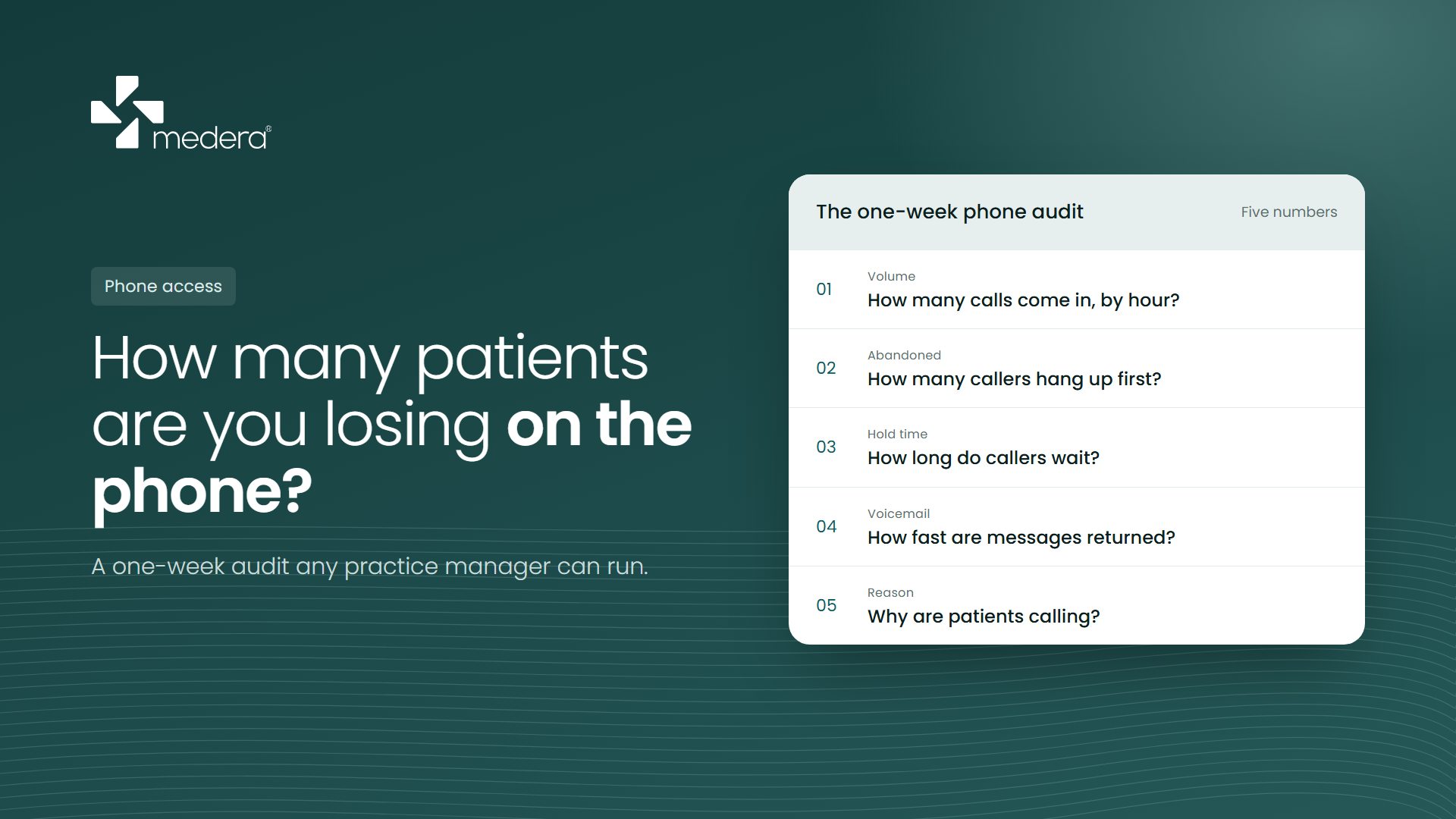
You don't need new software to see where calls are slipping. You need one normal week and five numbers.
- Volume by hour. Pull total inbound calls for each hour of the day. Most cloud phone systems can export this.
- Abandoned calls. How many callers hung up before anyone answered, and at what times.
- Hold time. The average wait, and the wait during your busiest hour.
- Voicemail. How many messages were left each day, and how long it took to return them. If your system doesn't track this, a simple tally sheet works.
- Call reasons. For one week, have the desk mark each call: scheduling, rescheduling, refills, billing, results, referrals, or other.
The point isn't a perfect dataset. It's to see the pattern, and the pattern is usually obvious once it's on one page.
What the numbers usually tell you
The peaks are predictable. In most practices, calls cluster first thing in the morning and right after lunch, exactly when check-in is busiest. If your abandoned calls line up with those hours, the issue isn't effort, it's coverage. The fix is a second set of hands on the phone during those windows, not a faster receptionist.
Long holds mean the phone and the check-in window are the same job. When one person handles both, the patient standing in front of them will always win, and they should. Separating the two, even for a few hours a day, usually cuts hold times quickly.
A voicemail backlog is a callback problem. Set a simple rule, such as all messages returned within two hours during clinic hours, and give someone ownership of it. A same-day callback keeps a patient. A next-day callback often doesn't.
Call reasons show what could be handled differently. If a large share of calls are simple scheduling, some of those patients would happily book online or by text. Industry surveys suggest most patients prefer having an online scheduling option. If a large share are refills or prior authorization status checks, a clear routing rule and faster follow-up can take those calls off the main line.
Where remote help fits, and where it doesn't
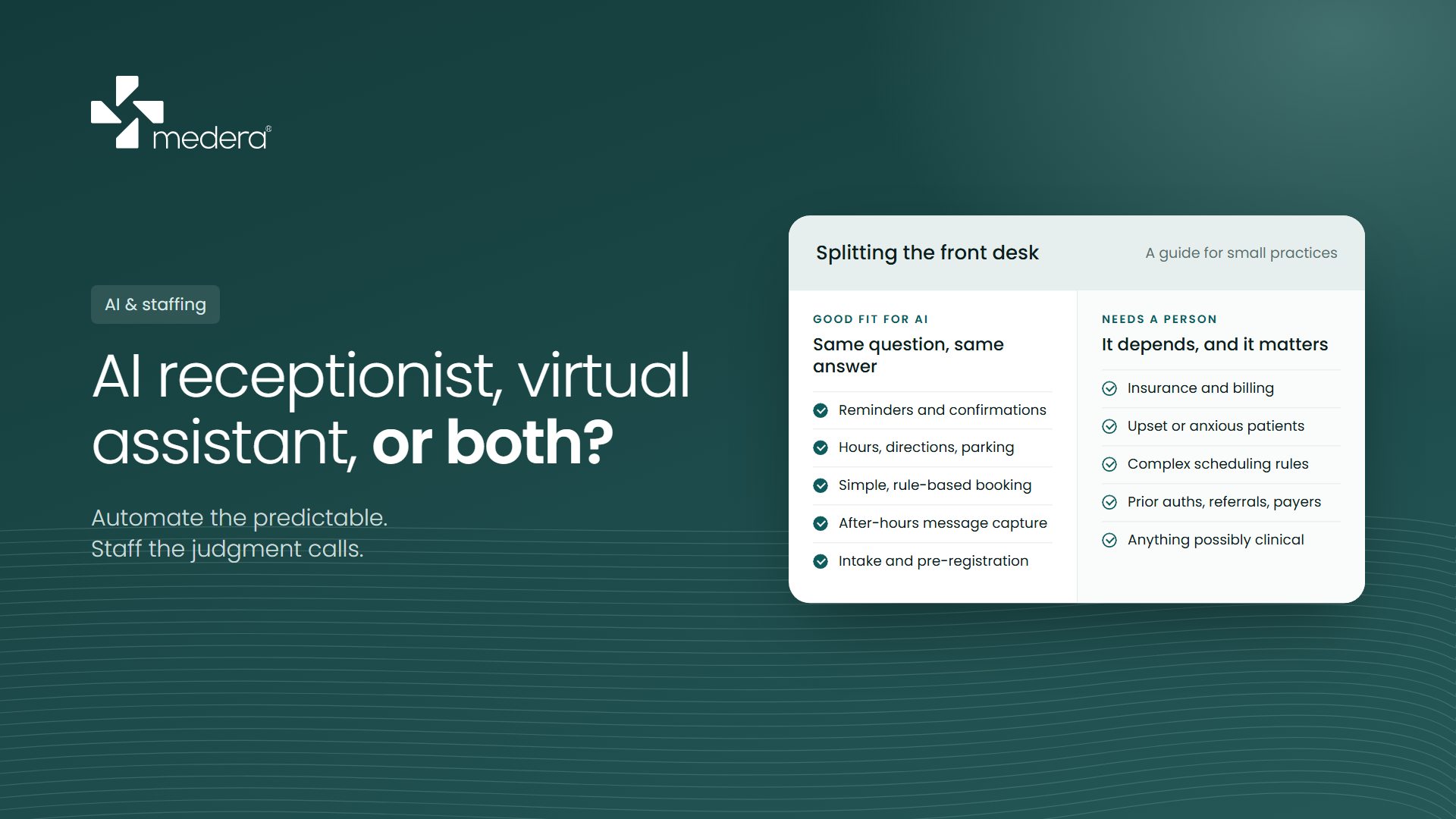
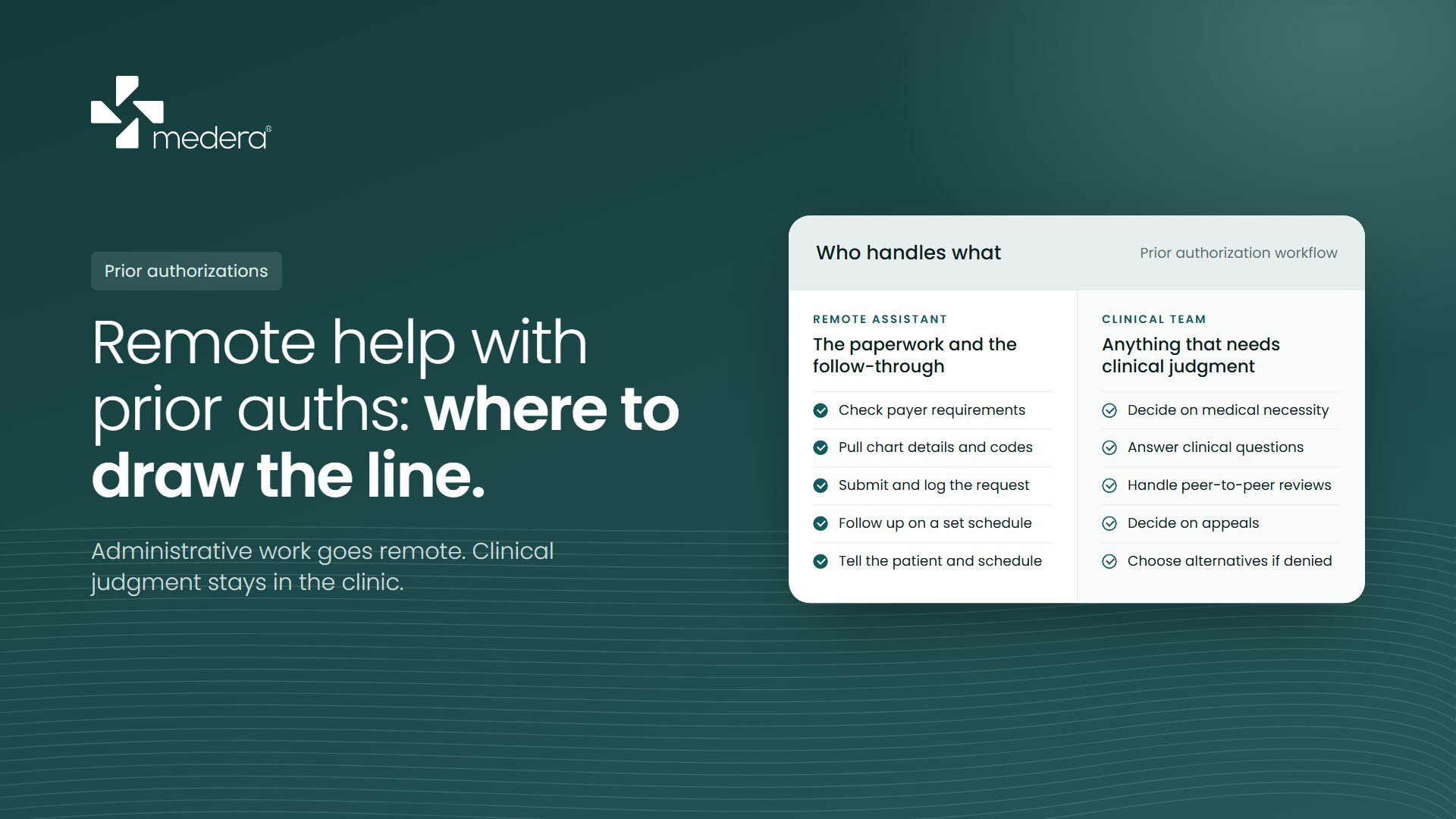
A remote assistant doesn't replace the person at your check-in window. Patients in the waiting room need someone there. What remote support can do well is take the work that pulls that person away: overflow calls during peak hours, the voicemail and callback queue, and the rescheduling and reminder calls that never get done when the desk is slammed.
From my own time working in US clinics, the biggest difference comes from making the phones someone's actual job during the busiest hours, rather than something everyone covers when they can. Calls that are answered "when there's a free moment" are the ones that get missed.
Start with the audit
If you do one thing this week, run the five-number audit. Even if you never talk to an outside provider, you'll know exactly where your phones are leaking and when. And if you'd like a second pair of eyes on the results, I'm happy to go through them with you.