If your no-show rate went up this year, you're not alone, and it probably isn't because your reminders stopped working.
In MGMA's August 2026 poll, 32% of medical groups said no-shows were higher than in 2025, 58% said they were about the same, and only 10% saw improvement. No-shows were also the single most common patient access priority practice leaders named for 2026, ahead of online scheduling and phone access.
Most practices have already done the obvious things: automated texts, reminder calls, confirmation requests. Many still don't know why rates went up. MGMA's own analysis makes the key point: if cost, transportation, work, or long scheduling lead times are what keep a patient away, another reminder won't solve it.
Reminders fix one problem: forgetting
A reminder works when the patient fully intends to come and simply loses track of the date. That's a real share of no-shows, and good reminders help. But a patient who can't get time off work, can't get a ride, is worried about the bill, or booked eight weeks ago and feels better now will get your reminder, read it, and still not come.
So the first step isn't another reminder. It's finding out why your patients actually miss.
Find out why, for one month
For the next month, have someone call every patient who no-shows the same day, with one goal: rebook them, and note the reason. Keep the categories simple:
- Forgot
- Couldn't make it: work, childcare, transportation, illness
- Cost: unsure what they'd owe, or knew it would be expensive
- Booked too far out: they felt better, went elsewhere, or the need changed
Also note the lead time, meaning how far in advance the visit was booked, and whether it was a new or established patient. After a month, you'll usually see one or two buckets that dominate. That's where to focus.
What helps, reason by reason
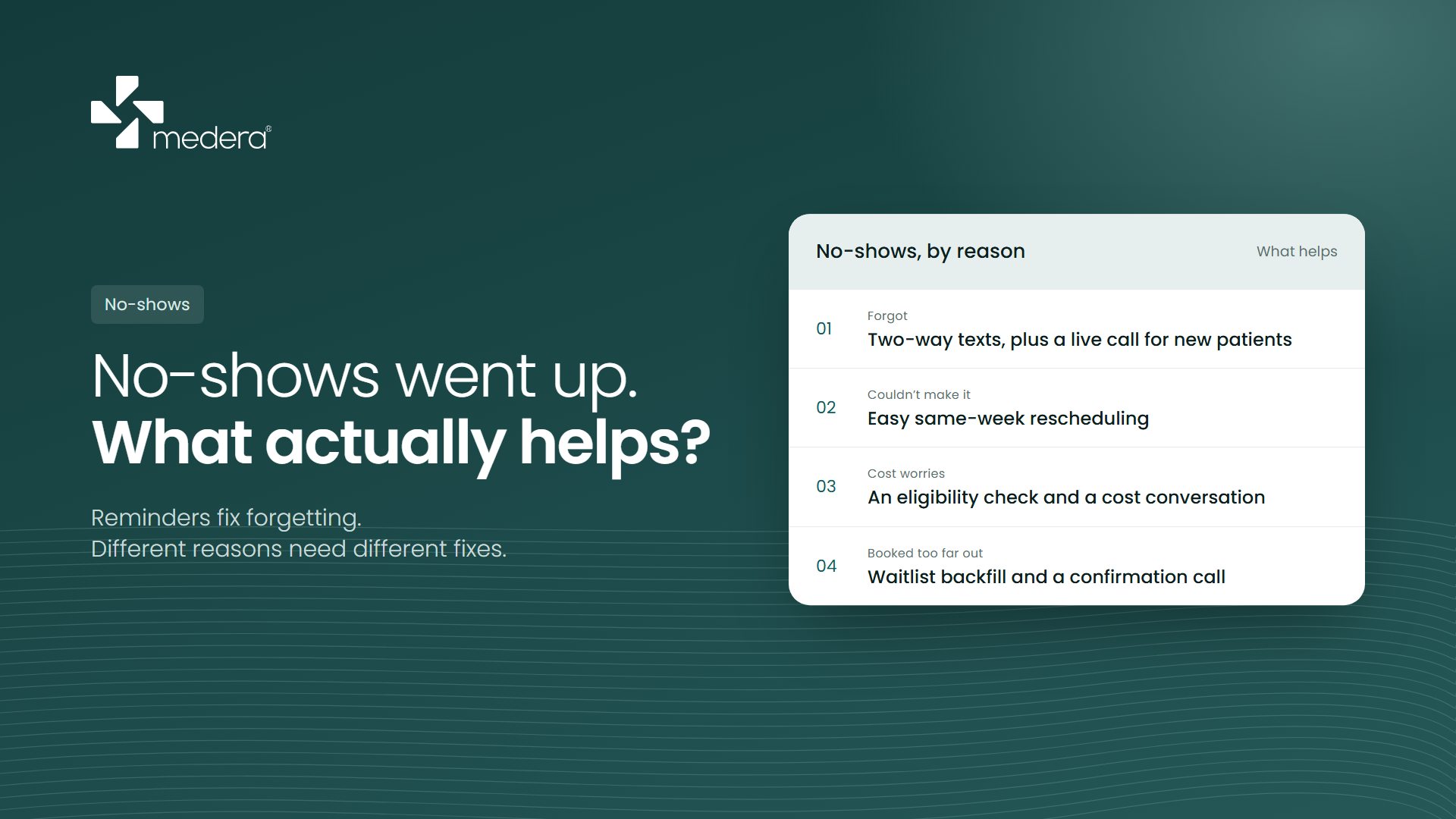
For forgetting: make the reminder a conversation. One-way reminders are easy to ignore. Two-way texts that ask the patient to confirm or reschedule work better, and for high-risk visits, a live call a day or two ahead is worth the time. High-risk usually means new patients, visits booked far in advance, and patients who have missed before. A person on the phone can also reschedule on the spot instead of hoping the patient calls back.
For "couldn't make it": make rescheduling easy. A patient who can't make Tuesday at 10 might happily come Thursday at 4. If rescheduling means calling during business hours and waiting on hold, many won't bother. Offer same-week options and early or late slots where you can, and make sure your reminder tells patients exactly how to move the appointment.
For cost: talk about it before the visit. MGMA's poll title says it plainly: no-shows are rising as patients face higher costs. A patient who doesn't know what they'll owe may quietly stay home. Checking eligibility a few days before the visit and giving patients a clear estimate of their copay or deductible removes the surprise. This also protects your revenue cycle, because eligibility problems are a leading cause of denied claims.
For long lead times: backfill and shorten the wait. The longer the gap between booking and visit, the more likely plans change. Keep a waitlist of patients who want an earlier slot, and work it every time a cancellation comes in. A confirmation call three to five days ahead gives you enough notice to fill the slot if the patient no longer needs it.
What about no-show fees and overbooking?
MGMA reports more practices adding no-show fees, and some practices overbook to absorb expected misses. Both can have a place, but neither tells you why patients are missing. A fee won't bring back a patient who couldn't afford the visit, and overbooking can lengthen waits for everyone who did show up. Use them alongside the steps above, not instead of them.
The real constraint is time
None of this is complicated. The challenge is that it's people-time: same-day calls to no-shows, live confirmation calls, eligibility checks, working the waitlist. At a busy front desk, these are exactly the tasks that slide when the phones are ringing and the waiting room is full.
This is one of the clearest places where remote front-office support pays off. Confirmation calls, waitlist backfill, and eligibility checks don't need someone standing at the check-in window. They need someone with dedicated time, a daily target, and access to your schedule.
Start with the one-month reason log. Once you know why your patients miss, the fix is usually clear.